
A polished loan page isn’t proof that you’re dealing with the real lender. A fake site or message can look convincing while asking for your Social Security number, bank details, or other sensitive information. Protecting yourself from identity theft when applying for loans starts with checking who is asking for your information.
It’s reasonable to hesitate before sharing personal details. Confirm that you’re using the intended website and application channel, then share only what the application requires. Don’t let an urgent message or deadline push you into acting before you’ve checked the request.
Use this practical checklist to verify an application channel, spot suspicious requests, and limit how much personal information you expose. You’ll also learn what to do if a message feels wrong or you think your information may have been compromised. A few careful checks can help you make a more informed decision.
Key Takeaways
- Protecting yourself from identity theft when applying for loans starts with verifying the application channel before entering sensitive details.
- Share only the information a legitimate application requires, and use a trusted device to submit it.
- Watch for warning signs such as password requests, unexpected payment demands, mismatched web addresses, or pressure to act fast.
- QuickCashDirect is a free loan-introduction service, not a lender. It states that it uses bank-level encryption and shares information only with chosen lenders.
Why loan applications can expose you to identity theft, and where risks begin
A loan application may ask for details that identify you and help a lender assess your finances. That can include your Social Security number, income information, and bank account details. The risk begins when someone outside the legitimate application process obtains those details and uses them without your permission.
In a loan context, identity theft is the misuse of someone’s personal information to apply for credit or access financial accounts without their consent. That’s different from sharing information through a legitimate application for its stated purpose. For a broader overview of identity theft, see Wikipedia. QuickCashDirect isn’t responsible for third-party content, and you access external sites at your own risk.
Urgency can make it harder to spot the difference. If you need funds quickly, a message promising fast approval may tempt you to click first and check later. Pause before sharing anything. Protecting yourself from identity theft when applying for loans means confirming who is asking for personal data and why before responding.
Which details deserve the most protection during a loan application?
Guard your Social Security number, income details, and banking information. Account information may put your funds at risk if misused. Enter only the details the application requires, and only on a page reached through a channel you trust. Passwords and one-time security codes are different: don’t send them in response to a loan message or enter them through an unexpected link.
How can fake loan offers create identity theft risks?
Phishing messages imitate financial companies to make a request seem routine. A message might claim you’re approved, warn that an offer will expire, or direct you to a lookalike application page. Treat unexpected links, pressure to act immediately, and requests for account credentials as warning signs. Don’t reply with sensitive details. Verify the communication through a known official channel before taking action.
How to protect your identity before and during an online loan application
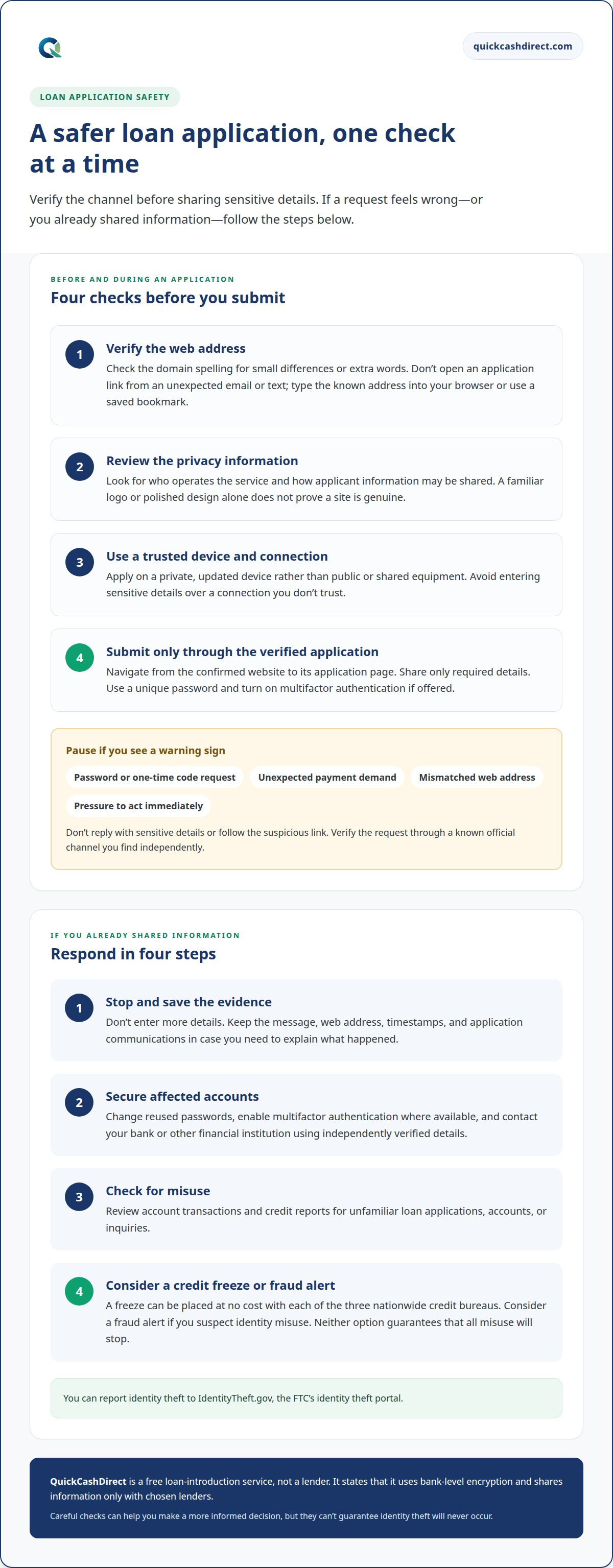
Use this checklist before sharing application details. Each step helps you confirm the channel and reduce unnecessary exposure. Protecting yourself from identity theft when applying for loans depends on checking the site before you submit information, not just reacting after a suspicious message arrives.
- Verify the web address. Check the domain spelling carefully. Don’t open an application link from an unexpected email or text. Type the known address into your browser or use a saved bookmark.
- Review the service’s privacy information. Look for an explanation of who operates the service and how applicant information may be shared. For example, the direct deposit loans guide discusses an online loan option. Follow links only after confirming the domain.
- Use a trusted device and connection. Apply on a private, updated device rather than public or shared equipment. Avoid entering sensitive details over a connection you don’t trust.
- Submit details only through the verified application. Navigate from the confirmed website to its application page. Use a unique password, and turn on multifactor authentication if the account offers it.
How do you verify a loan application website?
Compare the address with the one you intended to visit, looking for small spelling differences or extra words in the domain. Check that the privacy information explains how applicant details are handled. A familiar logo or professional design isn’t enough to prove a site is genuine. If anything doesn’t match, stop before entering information.
What should you do before submitting sensitive details?
Pause if an unexpected call, text, or email asks you to sign in, provide a password, or share a one-time security code. Don’t reply through that message. Find a known official channel independently and verify the request before proceeding. Even careful application security can’t guarantee that identity theft will never occur. If you later believe your information was misused, you can report the incident to IdentityTheft.gov, the FTC’s identity theft portal. QuickCashDirect isn’t responsible for external content, and you access external sites at your own risk.
When you’re ready to explore a loan introduction, review QuickCashDirect’s online application channel. Confirm that you’re on the intended site before entering personal details.
Warning signs and steps if your information is exposed
Act promptly if a loan message or application feels wrong. Watch for requests for passwords or one-time codes, unexpected payment demands, a web address that doesn’t match the company, or pressure to respond immediately. Stop replying. Verify the communication through contact details you find independently, not through the message or link that raised concern.
If you already shared information, take these steps:
- Stop and save the evidence. Don’t enter more details. Keep the message, web address, timestamps, and application communications in case you need to explain what happened.
- Secure affected accounts. Change reused passwords, enable multifactor authentication where available, and contact your bank or other financial institution using independently verified details.
- Check for misuse. Review account transactions and credit reports for unfamiliar loan applications, accounts, or inquiries.
- Consider a credit freeze or fraud alert. You can place a freeze with each of the three nationwide credit bureaus at no cost, or consider a fraud alert if you suspect identity misuse. Neither option guarantees that all misuse will stop.
What should you do first after sharing information with a suspicious site?
Prioritize accounts that could be accessed with the information you disclosed. If you shared bank details, contact that financial institution promptly and follow its guidance. If you believe someone has used your identity or applied for credit in your name, report the suspected theft to the Federal Trade Commission through IdentityTheft.gov. The FTC portal can provide a recovery plan. QuickCashDirect isn’t responsible for external content, and you access external sites at your own risk.
How can you monitor for signs that information was misused?
Check statements and credit reports for unfamiliar activity, including new accounts or loan inquiries you didn’t authorize. Keep a record of what you find and when you reported it. For related application preparation, review this loans for bad credit guide. Protecting yourself from identity theft when applying for loans also means responding to warning signs rather than waiting for more evidence.
To explore a loan introduction, review QuickCashDirect’s online loan application and submit information only through the verified channel.
How QuickCashDirect handles loan introductions, and what applicants should review
QuickCashDirect is a free loan-introduction service, not a lender. It connects applicants with chosen lenders. QuickCashDirect states that it uses bank-level encryption and shares applicant information only with those lenders. These are useful security details, but they can’t guarantee that identity theft will never occur.
Checking rates through QuickCashDirect doesn’t affect your credit score. Approval isn’t guaranteed. A chosen lender decides whether to make an offer and provides its own digital loan agreement. That lender, not QuickCashDirect, sets the agreement’s terms.
What happens after you submit an application?
If a lender makes an offer, read its agreement before accepting. Review the payment terms and any lender-specific fees, which are disclosed in that agreement. Most lenders allow early payoff without penalty, but review your specific agreement. Don’t assume terms from one offer apply to another.
Take time to verify who made the offer and that the agreement matches the lender you intended to hear from. Check the terms directly in the document. If something is unclear, pause before accepting. A loan introduction connects you with a lender; it doesn’t replace your review of the lender’s offer.
Review the site’s terms, too. The site is provided as is, without expressed or implied warranties. QuickCashDirect makes no warranties about the accuracy, completeness, or correctness of site information, or that the service will be uninterrupted or error-free. Liability is limited to the amount paid for site access, if any. Disputes are handled through individual arbitration, and class-action arbitration is waived. Local laws may restrict exclusions of implied warranties, so review the applicable terms and local law before proceeding.
Protecting yourself from identity theft when applying for loans means verifying the channel, protecting your information, and reviewing the agreement before you decide. Review how QuickCashDirect connects applicants with lenders, then verify, protect, review, and decide whether to proceed.
Make your next loan decision with confidence
Before starting another application, set a simple rule for yourself: don’t let a deadline or urgent message make the decision for you. Confirm where you are, what information is being requested, and what you’ll do with an offer if one arrives. A brief pause can help you stay in control of the process.
Protecting yourself from identity theft when applying for loans isn’t about avoiding every online application. It’s about making deliberate choices with your personal information and allowing yourself time to recognize anything that doesn’t feel right. If a request creates doubt, stop and verify it independently before continuing.
When you’re ready to explore a loan introduction, review how QuickCashDirect connects applicants with lenders. Read any offer carefully and decide at your own pace. Use the verified application channel and make your decision only after reviewing the lender’s agreement.
Frequently Asked Questions
Can someone steal my identity by applying for a loan in my name?
Yes. Someone with your personal information may use it to seek credit in your name, but simply submitting a loan application doesn’t mean identity theft has happened. Check your credit reports and account activity for unfamiliar applications, inquiries, or transactions. If something looks wrong, secure the affected accounts and contact the relevant financial institution or authority. These steps can help you protect yourself from identity theft when applying for loans.
How can I tell if an online loan application is legitimate?
Check the domain carefully and reach the application from the service’s verified website rather than an unsolicited link. Review its privacy and contact information to understand who operates it and how to reach the organization. Be cautious of pressure, requests for passwords or one-time codes, and unexpected payment demands. Pause and verify suspicious communications through a known channel before sharing sensitive details.
Does checking loan rates affect my credit score?
Checking rates through QuickCashDirect doesn’t affect your credit score. A hard inquiry may occur only if you accept an offer from a specific lender. Before accepting, read that lender’s agreement and application disclosures so you understand the terms and any effect the lender describes. Don’t assume every lender handles an application or credit check in the same way.
What should I do if I gave my Social Security number to a suspicious loan website?
Stop interacting with the site and save relevant messages and application records. Secure potentially affected accounts, then contact financial institutions using contact details you find independently. Review your credit reports for unfamiliar applications or accounts, and consider a credit freeze or fraud alert. Report suspected identity theft to the Federal Trade Commission through IdentityTheft.gov. These actions can help you respond, but can’t guarantee that all misuse will be reversed. QuickCashDirect isn’t responsible for external content, and you access external sites at your own risk.
Will QuickCashDirect ask me to pay money before I receive loan funds?
No. QuickCashDirect is a free loan-introduction service, not a lender, and its terms state that no one will contact borrowers to request money or purchases before loan funds are received. Treat an unexpected request cautiously and verify it through a known official channel. Any lender-specific fees are disclosed in the lender’s agreement, so review that document before accepting an offer.