
Yes, you can qualify for loans for seasonal workers, even if you earn income for only part of the year. Lenders typically want to see at least one full working season before counting seasonal pay. They may assess your average gross seasonal earnings, not just your largest busy-season paycheck.
A gap between jobs can make an application feel less straightforward, but seasonal work does not automatically erase your earning history. Organized records can help show how your work and income recur across seasons.
Learn when to apply, which W-2 income records can help, and how lenders may average seasonal earnings when assessing debt-to-income. Then use a simple step-by-step plan to prepare your application around your work cycle, rather than relying on one unusually strong pay period.
Key Takeaways
- Build a clear record of seasonal work so lenders can see how your income repeats between busy periods.
- Time your application around your work cycle and organize pay stubs, W-2 forms, and any employer confirmation.
- Understand why lenders may assess average gross seasonal earnings instead of relying on one peak-season paycheck.
- Compare the payment schedule with your off-season budget before choosing a short-term borrowing option.
Can you get a personal loan with seasonal income?
Yes. Documented seasonal income may support a personal loan application when it shows a recurring work pattern and repayments that fit your budget.
Use these steps to prepare, compare borrowing options, and consider support during work gaps.
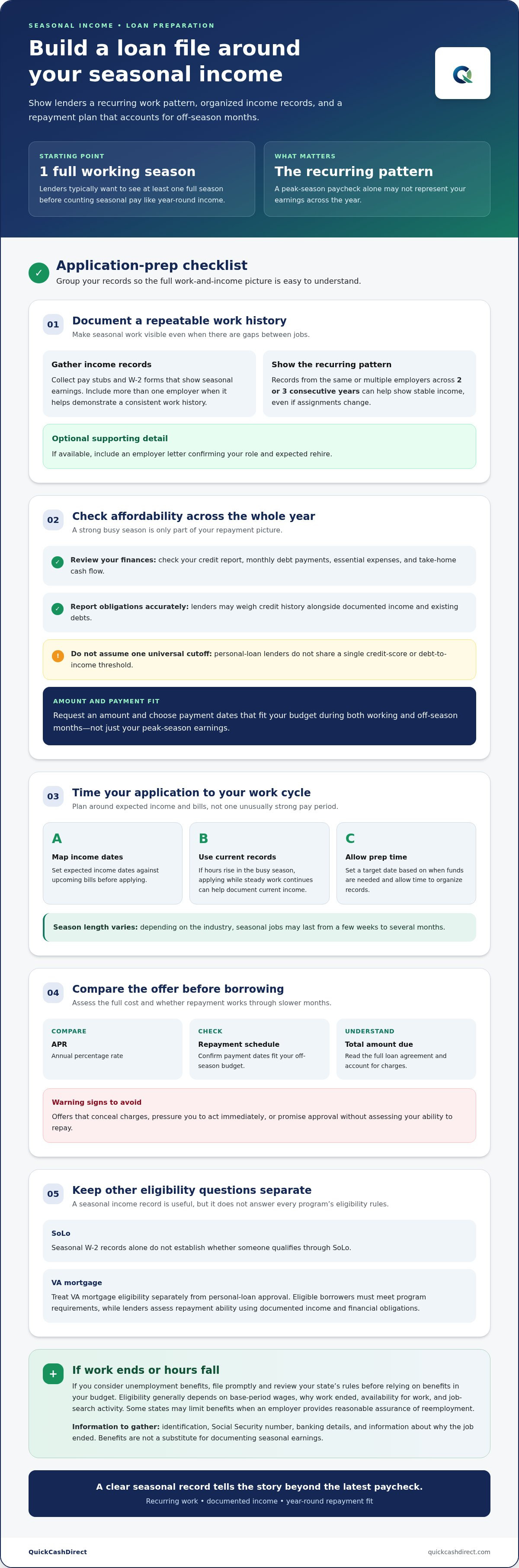
- For personal borrowing, gather pay stubs and W-2 forms that show your seasonal income. Lenders typically want at least one full working season before counting seasonal pay like a year-round salary. Include income from more than one employer when it helps show a consistent work history.
-
Compare Lenders and Avoid Predatory Offers
Before applying, compare the annual percentage rate (APR), repayment schedule, and total amount due. Read the full loan agreement and avoid offers that conceal charges, pressure you to act immediately, or promise approval without assessing repayment ability. Check whether payment dates fit your off-season budget, not just your peak-season earnings.
- For seasonal business financing, apply early and explain how the funds support the next work cycle. A landscaping business, for example, can organize sales records, cash-flow projections, and planned expenses. Financing may help cover working capital such as payroll, inventory, or rent during slower periods.
-
Improve Your Approval Prospects
Prepare pay stubs, W-2 forms, and a clear record of recurring seasonal work. If available, include an employer letter confirming your role and expected rehire. List current debts and essential expenses, then request an amount that fits your income during both working and off-season months.
- If your work ends or your hours fall significantly, file for unemployment promptly. Eligibility generally depends on factors such as wages during the base period, why work ended, availability for work, and job-search activity. Some states may limit benefits if an employer gives reasonable assurance of reemployment. Gather identification, your Social Security number, banking details, and information about why the job ended.
- Review state assistance rules before relying on benefits in your budget. Requirements vary by state. The Workforce Innovation and Opportunity Act was signed into law on July 22, 2014, according to U.S. Congress.
Personal loan eligibility with seasonal W-2 income
Seasonal W-2 income can support a personal loan application when records show a repeatable work pattern. Lenders also weigh credit history, existing debts, and your cash flow during off-season gaps.
-
Check Eligibility Without Regular Paychecks
Separate SoLo eligibility from a conventional lender’s review. Seasonal W-2 records alone don’t establish whether someone qualifies through SoLo. For a personal loan, gather pay stubs and W-2 forms, then show at least one full working season. Records from the same or multiple employers across 2 or 3 consecutive years can help demonstrate stable income, even when assignments change.
-
Assess Credit and Debt-to-Income Requirements
Before applying, review your credit report, monthly debt payments, and take-home cash flow. Personal loans do not have one credit-score or debt-to-income threshold that applies to every lender. Lenders may consider credit history alongside documented income and existing obligations. A recent seasonal paycheck may not reflect earnings across the year, so organize records showing your broader work pattern.
To improve approval prospects, submit consistent W-2 and pay-stub records, report debts accurately, and request an amount that fits your off-season budget.
- For a VA mortgage, treat eligibility as a separate question from personal-loan approval. Eligible borrowers must meet the mortgage program’s requirements, while lenders assess their ability to repay using documented income and financial obligations. Present seasonal W-2 records clearly, including recurring work and any periods without wages. A personal-loan credit review does not determine VA mortgage eligibility.
- If a seasonal layoff interrupts your pay, account for that gap in your budget. Unemployment insurance eligibility generally depends on base-period wages, why employment ended, availability for work, and job-search activity. Some states may restrict benefits when an employer provides reasonable assurance of reemployment. Benefits may also require ongoing job-search activity, so don’t treat them as a substitute for documenting your seasonal earnings.
Timing a loan application around the working season
Plan around your next work cycle, not just your latest paycheck. Depending on the industry, seasonal jobs may last from a few weeks to several months.
- Map expected income dates against upcoming bills before applying. If your hours increase during a busy season, applying while you still have steady work can help you document current income. Businesses seeking seasonal financing should apply early, before peak-season costs arrive. Set a target date based on when you need the funds and allow time to organize records.
- Define the purpose before seeking business financing. Seasonal business loans may cover working capital, such as payroll, inventory, or rent during off-peak periods. A retailer buying holiday inventory, for example, can connect the requested funds to its sales cycle and planned purchases. Use sales records or purchase orders to explain the need instead of relying on a broad estimate.
- Match the requested amount and repayment dates to expected cash flow. A retail example earned 60% of its revenue in Q4 and needed $1.5 million for holiday inventory in August. This illustrates why timing matters: the business needed funds before peak sales. Seasonal business-loan repayment terms are designed to align with revenue cycles, but a clear repayment plan still matters.
- Prepare business records before submitting an application. Lenders commonly review revenue history, credit score, debt-to-income ratio, and documents such as tax returns. Past sales, cash-flow projections, and a balance sheet can help explain the requested amount and repayment plan. For a personal loan, organize your W-2 and pay records, then compare scheduled payments with income during slower months.
How lenders average seasonal earnings
Distinguish peak-season pay from your income across the full year. Lenders may assess average gross seasonal earnings rather than rely on one busy-season paycheck.
- Collect W-2 forms and pay statements by season. Include records from every employer, not just your latest job. W-2s across 2 or 3 consecutive years can show whether work repeats. Add details that clarify recurring assignments or expected rehire. This timeline gives a lender context for a large deposit and the unpaid periods around it.
- Compare average gross earnings with monthly debts and potential repayments. A holiday paycheck may look substantial, but it does not show your cash flow across the year. List payments alongside income during working and nonworking periods. When assessing debt-to-income, lenders may consider average seasonal pay instead of treating one peak paycheck as steady year-round income.
- Keep personal wages separate from seasonal business revenue. Some seasonal businesses earn 50-80% of annual revenue in only a few months. A tourism employer may have a summer peak, while a retail employer may depend on holiday sales. Those business cycles help explain the work schedule, but business revenue is not your personal W-2 income.
- Make your work pattern easy to understand. Arrange records chronologically and note each employer, working season, and gap. If the same seasonal role returns regularly, include records that show the pattern. This helps distinguish recurring earnings from a one-time increase. Use the same timeline to assess whether loan payments would fit your slower months.
QuickCashDirect: Payday Loans
QuickCashDirect offers payday loans for people facing a short-term cash gap, including seasonal workers managing expenses between assignments. It also offers cash advances, online payday loans, and loans for bad credit.
Consider a short-term option only when you’ve mapped the repayment against your next income. Payday loans typically have fixed repayment periods of 2 to 4 weeks, which can be difficult to manage if your next work period hasn’t begun. Review the repayment terms and your off-season budget before choosing. If the payment would leave essential bills uncovered, avoid taking on that added strain.
For a short-term expense you can repay on schedule, visit QuickCashDirect online to explore your options.
Choose a Next Step That Fits Your Work Cycle
Make your next decision based on a realistic view of seasonal cash flow. Map expected income and essential expenses across busy and quiet periods, then decide what repayment amount would remain manageable if a shift ends or the next assignment starts later than expected. This budget can help you assess whether borrowing addresses a short-term need or adds pressure to the next season.
For loans for seasonal workers, start with a clear purpose and a repayment plan that fits your budget. Keep income records organized, identify what the funds need to cover, and avoid borrowing more than necessary. A measured decision can help you preserve flexibility as your work changes through the year.
Ready to explore a short-term option? Contact QuickCashDirect to discuss your options. Take the next step with a clear plan and confidence in your choices.
Frequently Asked Questions
Can you get a personal loan if you only work part of the year?
Yes, seasonal employment does not automatically prevent personal-loan approval. Loans for seasonal workers may be considered when applicants document recurring work and show how repayments fit their income throughout the year. If your job ends after a busy winter, for example, plan around the months before your next assignment, not only your highest recent paycheck.
How do lenders verify income for seasonal W-2 jobs like ski resorts or holiday retail?
Lenders may compare your recent pay stubs with W-2 forms and employment details. For a ski resort job, records from returning seasons can help distinguish recurring work from a one-time position. A holiday retail worker could organize pay statements by employer and season. An employer letter may also explain your role or expected return, when available.
Is qualifying with seasonal W-2 income different from qualifying with 1099 or gig income?
Yes. W-2 workers can use employer-issued tax forms and pay statements to document wages. Gig workers and independent contractors may need records showing self-employment income, such as tax returns or payment histories. In either case, organize documents by year and source. The key difference is how earnings are documented, not simply whether work follows a seasonal schedule.
What types of financial assistance are available?
Other support may include unemployment benefits, SNAP, Medicaid, CHIP, TANF, and energy assistance. Eligibility varies based on household income, family size, and state rules. Workforce services and training may also help you prepare for your next assignment or find work between seasons. Budget for assistance separately, since program eligibility and loan eligibility use different criteria.
What documents do you need to prove income from a seasonal job?
Start with W-2 forms and pay stubs covering your seasonal employment. Add records from previous seasons and other employers if they show recurring work. An employer letter describing your role or anticipated return can provide extra context. Keep documents grouped by employer and year, and make sure the names and dates align across forms before submitting an application.
What loan options are available for seasonal workers in the United States?
Depending on your needs, options may include a personal loan, installment loan, payday loan, or cash advance. Seasonal business financing is for business expenses, not personal bills. QuickCashDirect is a free loan-introduction service that connects borrowers with lenders offering payday loans, online payday loans, and cash advances. Checking rates through QuickCashDirect does not affect your credit score. Compare repayment terms with your off-season budget before deciding whether to apply.