
What if the best way to ask for money is to decide what you need before shame makes the decision for you? If you want to avoid the embarrassment of asking for money, remember that needing help can feel personal, especially when you fear rejection, judgment, or pressure to repay. A clear request helps you explain what you need while respecting your boundaries and the other person’s.
Start with a practical plan, not a perfect explanation. You don’t need to share every detail, but you do need to be clear about the amount, what it’s for, and whether you can repay it. If borrowing could strain a relationship, pause and compare other options before committing.
This guide explains how to make a respectful request, set realistic repayment expectations, and respond if the answer is no. It also covers how to weigh personal support against an online loan introduction. QuickCashDirect’s free loan-introduction service connects applicants with lenders. Checking rates uses a soft check and doesn’t affect your credit score, but approval isn’t guaranteed. Compare the terms and any lender-specific fees before accepting an offer.
Key Takeaways
- Treat shame as a feeling, not evidence that you’re irresponsible or undeserving of help.
- Prepare a focused request by clarifying what the money is for, how much you need, and when you need it. Share only relevant context.
- Compare personal help with options like a bill extension or payment arrangement, weighing urgency, privacy, relationship impact, and repayment capacity.
- Use direct, respectful wording that makes it clear the other person can say no without guilt or pressure.
- Before choosing a loan, review the full agreement, including repayment terms and any lender-specific fees.
Why Asking for Money Feels Embarrassing, and What Shame Leaves Out
Asking someone for financial help can feel exposing. You may worry they’ll judge your choices, say no, or see the relationship differently afterward. Those concerns are worth considering, but they don’t make your need a personal failing. A shortfall is a situation to address, not a verdict on your character.
Shame is a feeling, not proof that you’re irresponsible or undeserving. It can make a request feel like a confession, even when you’re simply explaining what’s happening and asking whether support is possible. You can ask without demanding. The other person gets to decide, and you can respect that choice while considering your next step.
What makes a money request feel so personal?
Money can involve private details about work, bills, health, family, or plans that didn’t go as expected. You may not want to share those details, especially if you’re unsure how the other person will respond. It’s also normal for people to feel differently about asking: one person may feel anxious, while another finds it straightforward.
Fear of rejection can add another layer. If you’re asking someone close to you, you may wonder whether the request will change the relationship or create expectations about repayment. Those are practical concerns, not signs that you’re overreacting. Separate what you know from what you fear. The fact might be, “I’m short on a bill.” The fear might be, “They’ll think I can’t manage my life.” One is information; the other is a prediction.
For broader context, understanding shame in society can help explain how social judgment may shape people’s experience of shame. QuickCashDirect isn’t responsible for external content, and use of the external site is at your own risk.
Does needing help mean you have failed?
No. Asking is a decision to communicate a need. It doesn’t prove anything about your overall financial ability or worth. A temporary need for money does not define your value as a person. Keep that distinction in view when self-critical thoughts start to sound like facts.
Write down the situation in neutral language: what expense needs attention, when it’s due, and what kind of help you’re considering. Then notice any assumptions you may be adding, such as “They’ll think less of me” or “I should handle everything alone.” You don’t need to dismiss those worries. Just don’t treat them as confirmed outcomes before you speak.
To avoid the embarrassment of asking for money, remember that a respectful request leaves room for an honest answer. You can explain the need without pressure or guilt. The person may say yes, no, or offer a different kind of support. Their response tells you about this request; it doesn’t define your character or what you deserve.
Prepare a Money Request That Feels Clear, Specific, and Respectful
Preparing a few details can make a difficult conversation easier. Before you approach someone, decide what you need and what you’re asking them to do. Specifics help the other person understand the request and make an informed choice. They also help you avoid agreeing to terms you can’t realistically meet.
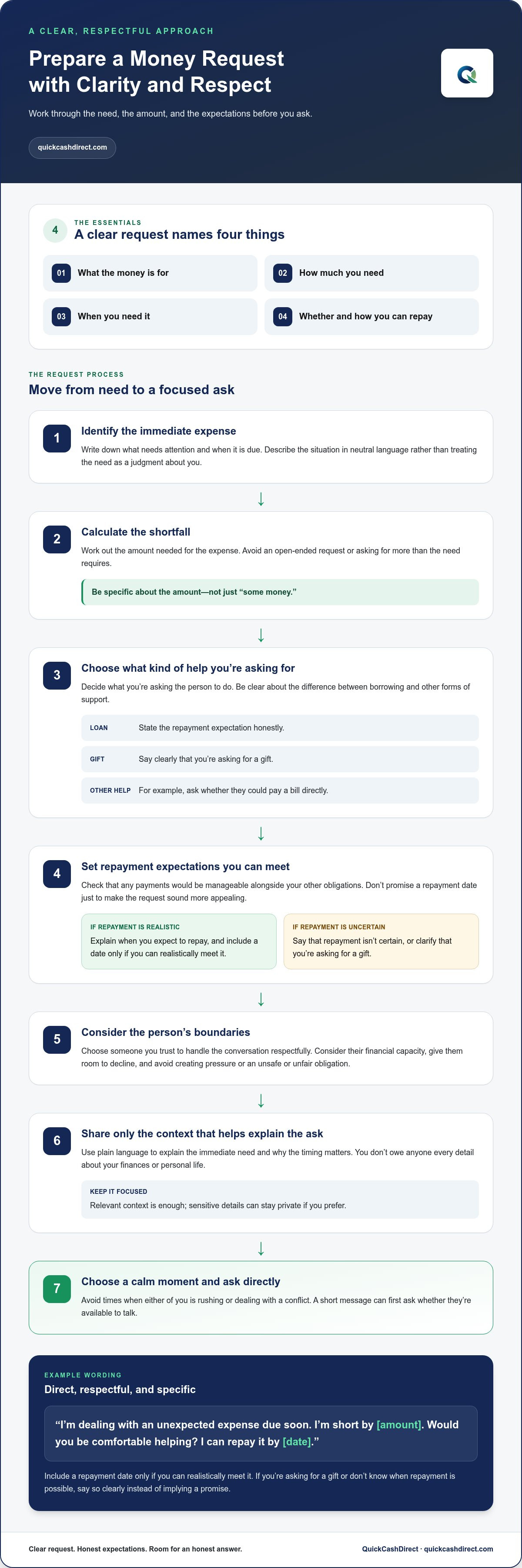
A clear request names the need, amount, timing, and repayment expectations.
What should you decide before you ask?
Work through the details in order. First, identify the immediate expense. Then calculate the shortfall rather than choosing an open-ended amount or asking for more than the need requires. Decide when the support is needed and whether you’re requesting a loan, a gift, or another kind of help, such as someone paying a bill directly.
Next, consider repayment honestly. A plan only works if your income and timing make the payments manageable alongside your other obligations. If you can’t confidently estimate when you could repay, don’t promise a date to make the request sound more appealing. Say that repayment isn’t certain, or clarify that you’re asking for a gift. Be direct about the difference.
Choose someone you trust to handle the conversation respectfully, while considering their boundaries and financial capacity. A close relationship doesn’t necessarily mean the person can afford to help. Give them room to decline, and avoid relying on someone who may feel pressured or whose support could create an unsafe or unfair obligation.
How can you ask without oversharing?
Explain the immediate need and why the timing matters in plain language. You don’t owe anyone every detail about your finances or personal life. Share enough context to make the request understandable, and keep sensitive information private if you prefer.
For example, you might say, “I’m dealing with an unexpected expense due soon. I’m short by [amount]. Would you be comfortable helping? I can repay it by [date].” Include a repayment date only if you can realistically meet it. If you’re asking for a gift or don’t know when repayment is possible, say so clearly instead of implying a promise.
Choose a calm time when neither of you is rushing or dealing with a conflict. A short message can first ask whether they’re available to talk. That gives them a chance to decide whether they’re ready for the conversation and gives you time to gather your thoughts.
To avoid the embarrassment of asking for money, focus on clarity rather than crafting a perfect explanation. If you’re also weighing borrowing, QuickCashDirect’s free loan-introduction service connects applicants with lenders for online personal loans. Explore an online loan option as one possibility. Checking rates uses a soft check and doesn’t affect your credit score. Approval depends on lender criteria and isn’t guaranteed.
Compare Personal Help, Payment Arrangements, and Online Loan Options
There’s more than one way to address a shortfall. Compare options by how quickly you need a solution, what you may repay in total, how much privacy you want, and whether the choice could affect a relationship. Most importantly, check that any repayment fits your budget. The right option is one you can manage, not simply the one that feels easiest to ask for.
Before borrowing, consider whether you can address the bill directly. A bill extension or payment arrangement may give you more time without taking out a loan. Ask the biller what options are available and what each would require. If the need can wait, compare that route with personal help and borrowing before committing.
- Urgency: Identify when the expense must be covered. Don’t assume a loan or personal request will produce money by a particular date.
- Total repayment: For a loan, compare the full amount due, not just the payment size.
- Privacy: Consider how much personal or financial information each option involves.
- Relationship impact: Weigh whether borrowing from someone you know could create tension or expectations.
- Repayment capacity: Choose only a commitment you can reasonably meet alongside your other obligations.
When might asking someone you trust fit?
Personal help may avoid a formal loan application, but it still needs clear boundaries. Agree before money changes hands whether it’s a gift or a loan. If repayment is expected, discuss a date and amount that feel realistic for both of you. Clear expectations can reduce misunderstandings, but don’t promise a schedule your income can’t support.
Could a payment arrangement address the shortfall?
If the money is for a bill, contact the biller to discuss an extension or payment arrangement. This may address the immediate deadline without borrowing, but the arrangement’s conditions matter. Understand when payments are due and whether the plan fits your budget. Compare it with other choices based on timing, privacy, and affordability.
What should you understand before considering an online loan?
QuickCashDirect is a free loan-introduction service, not a lender. It connects applicants with lenders for online personal loans. Its primary product offers $300 to $3,000 with terms of 3 to 36 months for qualified consumers. APRs for qualified customers range from 5.99% to 35.99%. Approval depends on lender criteria and isn’t guaranteed, and lender decision times can vary.
Checking rates uses a soft check and doesn’t affect your credit score. A hard inquiry occurs only if you accept an offer. Before accepting, read the full agreement and compare the APR, payment schedule, total repayment, and any lender-specific fees. Fees and terms vary by lender and are disclosed in the loan agreement. Early payoff is generally allowed without penalty, but review your specific agreement. Compare these choices on their practical terms, then select a next step that protects your budget and relationships.
Use Simple Wording and Plan for Any Answer
A short script can keep the conversation focused when nerves make it hard to find the words. State the immediate need, the amount, when you need it, and whether you’re asking for a loan or a gift. Then leave space for an honest answer. A respectful request doesn’t use guilt or pressure, and doesn’t assume the other person must agree.
What can you say when you ask?
Start by checking whether they’re comfortable talking. For example: “Could we talk about a money request? It’s okay if you’re not able to help.” This gives the other person room to choose whether to have the conversation, rather than surprising them with a demand.
Keep the explanation brief and specific. You could say: “I’m short by $240 for a utility bill due Friday. Would you be comfortable lending it to me? I expect to repay you by the end of next month. Please say no if that doesn’t work for you.” Use a repayment date only if it’s realistic. If you’re asking for a gift, say so. If you don’t know when you can repay, don’t suggest that you do.
Adapt the wording to fit your situation. You can leave out private details that aren’t needed to explain the request. Practice once or write down the key points before speaking. The goal isn’t to sound polished. It’s to make the request understandable and give the other person a genuine choice.
How can you respond if they say no?
Keep your reply calm and brief. Try: “I understand. Thanks for hearing me out.” Don’t argue, shame them, or demand a reason. A no may reflect their own budget or boundaries, not a judgment about you. You don’t need to reveal more personal information to persuade them.
If they say yes, confirm whether the help is a loan or gift and agree on any repayment details before accepting. If they’re unsure, you might say: “Take some time to think about it. Would it be okay if I follow up on Thursday?” Then follow up once at the agreed time. Repeated messages can create pressure and strain trust.
Whatever the answer, move to your next practical option rather than treating one response as a verdict. You might ask about a bill extension, consider another source of support, or compare borrowing terms. To avoid the embarrassment of asking for money, keep the conversation respectful and choose a next step based on what you can afford.
If an online loan introduction is another option you’re considering, review personal loan options through QuickCashDirect. QuickCashDirect connects applicants with lenders and isn’t a lender. Approval depends on lender criteria and isn’t guaranteed. Read the full lender agreement before accepting an offer.
Choose a Next Step That Protects Your Finances and Your Relationships
Make your next move based on the facts, not the pressure to resolve everything at once. A request or loan can help with an immediate shortfall, but the commitment should still fit your budget and boundaries. Pause if you don’t understand what you’re agreeing to or how you’ll manage repayment.
Use this checklist before deciding:
- Urgency: What needs to be paid, and by when?
- Amount: What is the precise shortfall? Avoid taking on more than the need requires.
- Alternatives: Could a bill extension, payment arrangement, or other support address the problem?
- Repayment capacity: Can you meet the payments without putting other essential obligations at risk?
- Next action: What step can you take now, and what will you do if it doesn’t work?
How do you decide whether to accept financial help?
Compare the immediate benefit with the full commitment. Personal help may involve relationship expectations, while a loan creates scheduled repayment and may include lender-specific fees. If you borrow from someone you know, write down whether it’s a loan or gift, the amount, and any agreed repayment dates. A simple shared record can prevent misunderstandings.
Don’t accept until the terms are clear. If you feel rushed, don’t understand the repayment plan, or can’t see how payments will fit your budget, take time to reconsider. A solution that covers today’s expense but creates an unmanageable obligation may leave you under greater pressure later.
What does an online loan introduction involve?
QuickCashDirect is a free loan-introduction service that connects applicants with lenders. It isn’t a lender, and approval depends on lender criteria, so it isn’t guaranteed. Checking rates uses a soft check and doesn’t affect your credit score. A hard inquiry occurs only if you accept an offer.
If you receive an offer, read the full agreement before accepting. Compare the APR, payment schedule, total repayment, and any lender-specific fees. Early payoff is generally allowed without penalty, but review your specific agreement for the exact terms that apply to you.
Consider this route alongside personal support and payment arrangements, not as an automatic answer. Learn about QuickCashDirect’s loan-introduction service as one online option. Compare the written terms carefully, then choose a next step that addresses the need without overextending your finances or placing avoidable strain on a relationship.
Take One Clear Step Forward
You don’t have to solve every money concern in one conversation. Choose a next action you can take with a clear head, whether that means setting up a discussion, asking about a payment arrangement, or considering another source of support. Give yourself permission to pause if a choice feels unclear or would stretch your budget too far.
QuickCashDirect is a free loan-introduction service that connects applicants with lenders. It doesn’t make lending decisions. Checking rates doesn’t affect your credit score, and its primary loan product ranges from $300 to $3,000 for qualified consumers, subject to lender approval and criteria.
Explore QuickCashDirect’s free loan-introduction service as one possible next step. You can review your choices without letting shame make the decision for you. A thoughtful request or a careful decision to pursue another option both move you forward. Take the next step at a pace that protects your finances and peace of mind.
Frequently Asked Questions
Why do I feel embarrassed to ask someone for money?
Embarrassment can come from feeling exposed, depending on someone, or anticipating judgment. It doesn’t prove that asking is wrong or that you’ve failed. Separate the practical facts from what you fear the other person might think. Decide what support would help, what details you’re comfortable sharing, and whether this person usually respects your privacy and boundaries.
How do I ask a friend or family member for money without feeling awkward?
Make the request clear and give the person time to consider it. You could say, “Could I talk with you about a short-term money need sometime today? It’s okay if you can’t help.” Explain the immediate expense and what kind of support you’re seeking. Avoid asking in front of other people, which can make it harder for either of you to respond freely.
What should I say when I need to borrow money?
Try a simple script: “I have an unexpected expense and need [amount] by [date]. Would you be comfortable lending it? I can repay [realistic plan]. It’s okay if you can’t.” Adapt it to your situation. If your income or repayment timing is uncertain, say so plainly before they decide. Don’t call it a loan if you’re actually asking for a gift.
Can I ask for money without explaining everything?
Yes. You can give a concise reason without disclosing sensitive details. For example: “An urgent expense has left me short, and I need help covering it by Friday.” If the person asks for more information, you can say, “I’d rather keep the details private, but I can explain what the money would cover.” Share only what you’re comfortable having that person know.
What should I do if someone says no to lending me money?
Accept their answer without asking them to defend it. You can reply, “Thanks for listening. I understand.” Then move to a practical alternative, such as asking the biller whether a different due date is possible or reviewing which expense needs attention first. One person’s decision tells you what they can offer now, not what everyone thinks of you. Don’t accept unclear or unaffordable borrowing terms out of panic.
Is asking someone for money better than applying for a loan?
Neither choice is automatically better. Consider whether personal help could affect the relationship, and compare a loan’s APR, payment schedule, total repayment, and lender-specific fees. A manageable payment can still cost more overall if the repayment period is longer. If the written agreement or repayment expectations aren’t clear, pause before accepting. Choose the option that addresses the need without putting future essentials at risk.
Will checking loan rates through QuickCashDirect affect my credit score?
No. Checking rates through QuickCashDirect uses a soft check and doesn’t affect your credit score. A hard inquiry occurs only if you accept an offer. QuickCashDirect is a free loan-introduction service, not a lender, and it doesn’t make lending decisions. Approval depends on lender criteria and isn’t guaranteed. Before accepting an offer, read the lender’s agreement for repayment terms and any lender-specific fees.