
Getting back on your feet financially starts with a clear view of your income, expenses, savings, and debt. Build a household budget around what you can actually afford, then set goals you can tackle step by step. The 50/30/20 rule can provide a starting framework: allocate 50% of income to needs, 30% to wants, and 20% to savings and debt payoff.
When money feels tight, it can be hard to know what to address first. A practical plan helps you see where your money goes, choose your next priority, and make steady progress without trying to fix everything at once.
This guide walks you through assessing your finances, tracking a budget, building savings, setting goals, and reducing spending. You’ll also learn how to plan for irregular costs and choose a debt payoff approach that fits your priorities. Start with the numbers in front of you, then take one manageable step at a time.
Key Takeaways
- Start an emergency fund with an amount that fits your current budget, then build it steadily to help prepare for unexpected costs.
- Track income and spending so you can spot pressure points and adjust your household budget with purpose.
- Turn broad financial hopes into clear goals, then choose practical steps for savings and debt payoff.
- Review your subscriptions and recurring expenses to identify spending you can reduce or redirect.
- When a necessary expense needs urgent funding, consider whether a payday loan or cash advance fits your situation and repayment capacity.
1. Building an emergency fund
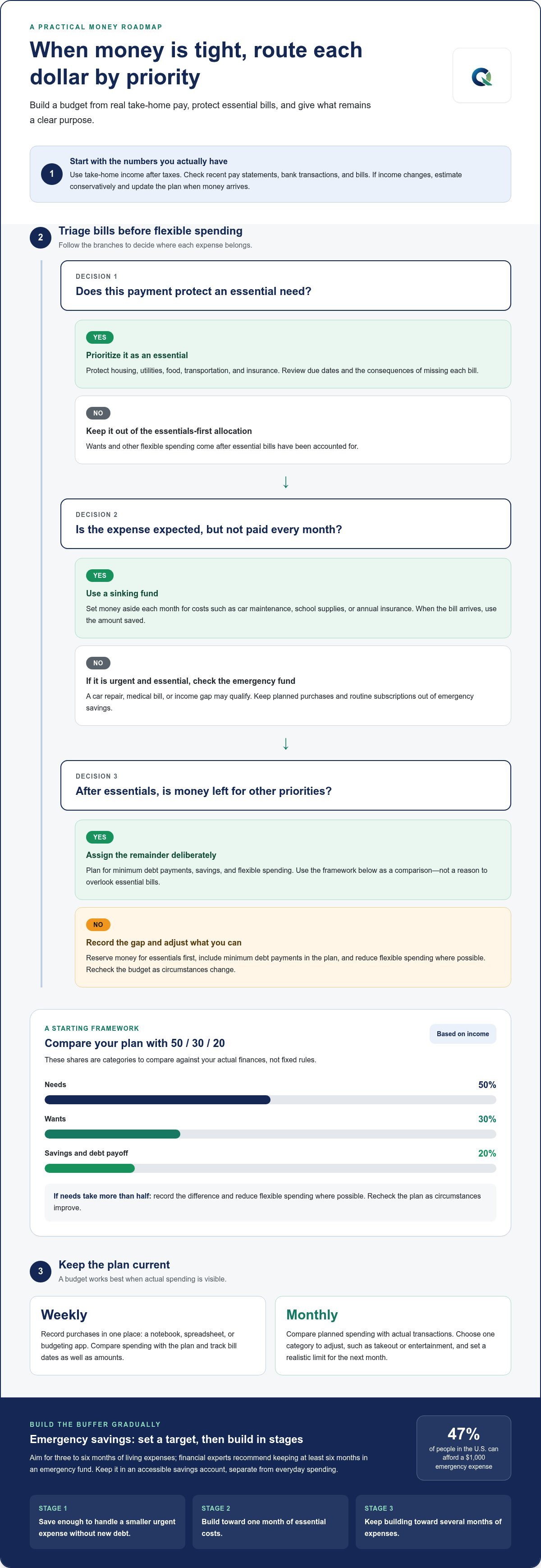
An emergency fund creates a cash buffer for urgent expenses, such as a car repair, medical bill, or income gap. In the United States, 47 percent of people can afford a $1,000 emergency expense. Start by choosing a small, repeatable amount from each paycheck. Move it into savings as soon as income arrives, before optional spending uses it. If money is extremely tight, save a modest amount consistently and increase it when your budget allows.
How much emergency savings should I build, and where should I keep it? Aim for three to six months of living expenses; financial experts recommend keeping at least six months in an emergency fund. Keep the money in an accessible savings account, separate from everyday spending, so you can reach it for genuine emergencies without confusing it with bill money.
Build your target in stages. First, set aside enough to handle a smaller urgent expense without relying on new debt. Next, save toward a month of essential costs, then keep building toward several months of expenses. Base the target on necessary bills, including housing, utilities, food, transportation, insurance, and minimum debt payments. Revisit it when your income, household size, or essential costs change.
Protect the fund by defining what counts as an emergency. Use it for an essential expense that cannot wait, not a planned purchase or routine subscription. After a withdrawal, resume regular deposits and rebuild the balance. If a bill is expected but irregular, such as annual insurance, save for it separately in a sinking fund. That keeps planned expenses from draining emergency savings.
If food costs are making it difficult to save, look into SNAP, WIC, and emergency food assistance. These options can help eligible households access food support and preserve cash for other urgent needs. If housing is at risk, emergency housing assistance may help with temporary housing and rent support. Government programs may also provide affordable housing and rental assistance to people who qualify. Treat support as part of a short-term plan: identify the immediate need, apply for relevant assistance, and protect money for essential bills.
How can I increase income through a better job, side work, or training? Compare your current pay and hours with job openings, then target roles that use your existing skills or offer stronger earnings. Consider side work that fits your schedule, and choose training tied to a specific job requirement. Direct any added income toward urgent bills first, then build savings automatically. Review the plan when work hours or expenses change, and keep deposits steady whenever possible.
Managing urgent needs while continuing to build a reserve for essential bills is vital when getting back on your financial feet. QuickCashDirect recommends establishing an emergency fund that can cover living expenses for several months in case of job loss or income disruption. Build that longer-term cushion gradually as added income becomes available, keeping the goal tied to essential expenses rather than optional purchases.
In the United States, food support options include SNAP, WIC, and emergency food assistance. Accessing food support can help preserve cash for urgent costs while income is limited, making it easier to keep saving toward the fund instead of using savings for daily food needs.
2. Creating and tracking a household budget
Getting back on your feet financially begins with a budget based on actual take-home pay, not an ideal month. Add income after taxes, then subtract regular expenses to see what remains. Use recent pay statements, bank transactions, and bills to record real amounts. Include housing, utilities, food, transportation, insurance, debt payments, and recurring subscriptions. If income changes, use a conservative estimate and update the plan when money arrives.
How do I create a realistic budget after a financial setback? List current take-home income and essential expenses first, then assign the remaining money to debt payments, savings, and flexible spending. Use recent transactions to set workable limits, and revise the budget when income or bills change. A budget supports getting back on your feet financially by giving each available dollar a clear purpose.
The 50/30/20 rule offers a starting framework: allocate 50% of income to needs, 30% to wants, and 20% to savings and debt payoff. Treat those shares as categories to compare against your actual finances, not a reason to ignore essential bills. If housing or other needs take more than half, record the difference and reduce flexible spending where possible. Recheck the plan as circumstances improve.
How can I prioritize bills and essential expenses when money is tight? Rank payments by what protects housing, utilities, food, transportation, and insurance, then review due dates and the consequences of missing each bill. Reserve money for essentials before assigning funds to wants, and include minimum debt payments in the plan.
Make the budget practical to use. Choose a notebook, spreadsheet, or budgeting app, then record each purchase in the same place. Compare spending with your plan at least weekly. A brief review can catch an unexpected charge or a category running low while there’s still time to adjust. Track payment dates as well as amounts, so your account has enough money when bills come due.
Plan for irregular expenses with sinking funds. Set aside money each month for costs you expect but don’t pay monthly, such as car maintenance, school supplies, or annual insurance. Keep each purpose visible in your budget. When the bill arrives, use the amount saved instead of treating it as an emergency or putting it on a credit card.
After each month, compare planned spending with actual transactions. Identify one category to change, such as takeout or entertainment, and set a realistic limit for the next month. If a necessary expense still creates a short-term gap, an emergency loan option may be worth considering, but include its repayment in your budget before borrowing. Getting back on your feet financially takes a plan you can keep adjusting as your situation changes.
3. Setting financial goals
Choose goals that match your current financial situation, then make each one specific and trackable. For example, name the goal, the amount needed, and the action you’ll take from each paycheck. If you have several priorities, rank them: cover essential bills, reduce costly debt, build savings, then plan for longer-term needs. Review the order whenever your income or expenses change.
For debt repayment, pick a method you can follow consistently. The debt snowball method starts with your smallest balance; after paying it off, apply that payment toward the next-smallest debt. The debt avalanche method directs extra money toward the debt with the highest interest first. Compare your balances, interest rates, and available payment amount, then choose one approach and track each balance as it falls.
Give short-term and retirement goals separate roles. A short-term target could be saving for car maintenance or holiday costs, while retirement savings serve a longer horizon. For example, setting aside $50 per month reaches $600 each year for Christmas expenses. According to the Internal Revenue Service, an individual can contribute up to $7,000 annually to a Traditional or Roth IRA. Choose a contribution that fits after essential expenses and debt payments.
How can I improve my credit score after missed payments or financial hardship? Pay every current bill on time, reduce credit card balances where possible, and avoid taking on new debt you don’t need. Review your credit reports for errors and dispute inaccurate information with the reporting company.
What are the risks of debt settlement, payday loans, and credit repair services? Debt settlement can involve creditor refusal, added costs, and credit consequences; payday loans can create repayment pressure if the due date arrives before you have enough income. Credit repair services may charge for work you can do yourself, so understand the service and costs before agreeing.
Set a clear checkpoint for each goal, such as reviewing balances after every payday. If an unexpected expense interrupts saving, adjust the next contribution rather than abandoning the goal. Once you reach a target, redirect that money toward the next priority. This keeps progress moving and makes each completed goal a practical step toward greater financial stability.
To make the choice easier, consider what would help you stay engaged: seeing a balance disappear sooner, or focusing on the debt with the highest interest. The snowball and avalanche methods are commonly used strategies for paying off credit card debt. Treat the method as a tool, not a test of discipline; the useful approach is the one you can keep following while meeting essential obligations. If neither feels workable, revisit the amount available for extra payments and set a smaller, repeatable contribution.
Keep your goal visible in a place you check regularly, and record each payment and remaining balance. When circumstances change, make a deliberate adjustment: pause extra payments if necessities require attention, then resume when the budget allows. A missed checkpoint is a prompt to review the plan, not a reason to discard it. Recognize progress without counting money needed for bills as available savings. This keeps the goal responsive to your cash flow and helps you choose a manageable next step.
Assessing income, expenses, savings, debt, and net worth
Start with a clear financial snapshot. Record take-home income, essential expenses, savings balances, and every debt balance. Add the value of assets you own, such as cash and investments, then subtract debts. The result is your net worth. It may be negative after a setback, but tracking it over time shows whether debt is shrinking and savings are growing.
Compare monthly expenses with post-tax income to see what remains after bills. Separate essential costs from flexible spending, then identify the categories putting the most pressure on cash flow. The 50/30/20 rule assigns 50% of income to needs, 30% to wants, and 20% to savings and debt payoff. Use it as a comparison point, then adjust the shares to reflect actual bills and priorities.
Review transportation as a distinct expense because payments, insurance, and gasoline can add up. One budgeting guideline recommends keeping those combined costs within 10% of gross income. Compare the total with your own income, then consider whether a payment, insurance choice, or travel routine is driving the gap. Track the effect of any change in your next review.
Assess retirement savings by listing account balances, current contributions, and any employer match. An employer 401(k) plan may match a worker’s contribution of 3% of annual salary with an additional 3%. If your budget allows, check whether your contribution captures the available match. Estimate retirement needs by considering future housing, healthcare, and everyday expenses, then compare those needs with expected income and savings.
According to the Internal Revenue Service, an individual age 50 or older can contribute up to $8,000 annually to a Traditional or Roth IRA. Use this limit as context when reviewing retirement contributions, not as a required savings target. Your income, current expenses, debt payments, and near-term goals all affect what you can set aside.
Make saving easier to maintain. Set an automatic transfer for payday, choosing an amount that leaves enough for upcoming bills. If income varies, schedule a smaller transfer and add more after higher-income periods. Round-up savings apps can move the difference between a purchase and the next whole dollar into savings. Review transfers regularly, and pause them if they risk leaving too little for essential payments.
Update your snapshot after a major change, such as a new job, a paid-off balance, or a higher housing bill. Compare the new figures with your previous record. This simple check shows which financial moves are improving your position and where to make your next adjustment.
5. Reducing spending and subscriptions
Start by tracking spending before cutting it. Review bank and card transactions, then group purchases into essentials, flexible costs, and subscriptions. Look for repeat charges, convenience purchases, and categories that regularly exceed your plan. A clear record helps you choose targeted strategies instead of cutting expenses that keep your household functioning.
Subscriptions deserve a close review because small recurring charges can hide in monthly statements. The average American spends $133 more per month on subscriptions than they realize. Check each transaction for its name, renewal date, and amount. Cancel services you no longer use, and consider pausing services used only occasionally. Keep the subscriptions that support essential needs or provide clear value.
Make the review concrete. Open your account statements and list streaming platforms, music services, memberships, delivery plans, apps, and cloud storage. Check whether two services perform the same function. Remove duplicates, switch to a lower-cost plan when it still meets your needs, or rotate entertainment subscriptions rather than paying for several at once. Recheck the list after cancellations to confirm recurring payments have stopped.
Cut non-essential spending with a specific rule you can follow. For example, wait before buying an unplanned item, remove saved payment details from shopping accounts, or set a weekly limit for takeout. Choose changes that reduce spending without creating a larger cost elsewhere. If driving less would make work unreliable, focus on another flexible category instead. Keep food, housing, utilities, and necessary transportation protected.
Track the result after each change. Compare recent transactions with your previous spending, and note which adjustment freed up money without disrupting essential routines. If a cut proves unrealistic, revise it rather than abandoning the review. Direct any amount freed up toward the priority in your financial plan, such as an overdue bill, debt payment, or savings goal.
Use a short, recurring check to keep spending visible. Review new charges, upcoming renewals, and account balances together. Mark subscriptions that renew soon, then decide whether to keep or cancel them before the next payment. A shared household list can help everyone recognize which services are active and avoid signing up for overlapping plans.
Reducing expenses can improve cash flow, but it may not resolve an urgent bill that remains due. If an unavoidable cash gap persists, compare the repayment obligation with your upcoming income before borrowing. You can review payday loan options for a short-term funding need, while keeping the repayment in your budget and protecting essential payments.
QuickCashDirect: Payday Loans
QuickCashDirect provides access to payday loans, cash advances, online payday loans, and loans for bad credit. These options may help when an urgent expense cannot wait for your savings plan to catch up. Before applying, identify the amount needed and review your upcoming bills, income, and repayment obligations. Borrow only if the repayment fits your budget without putting essential expenses at risk. A short-term loan can address an immediate cash gap, but it won’t replace an emergency fund or resolve ongoing budget shortfalls. Compare the repayment terms with your financial priorities, and choose carefully. For information about available options, visit QuickCashDirect online.
Take Your Next Step With a Clear Plan
Choose one action you can complete today. Set a transfer, review an upcoming bill, or adjust a spending category. Then decide when you’ll revisit your plan. A regular check-in helps you respond to changes early instead of letting one difficult month dictate your next move. Keep your goal visible and make each decision support it.
Getting back on your feet financially takes steady choices, not a perfect start. If an urgent expense leaves a short-term gap, consider the repayment carefully and make sure it fits your budget. QuickCashDirect offers Payday Loans, Cash Advance, and Payday Loans Online for people exploring short-term options. Borrow only when the terms and repayment timing work for your situation.
For a next step, contact QuickCashDirect to explore your options. Keep moving at a pace your finances can support. One deliberate choice can give your plan direction, and the next can build on it.
Frequently Asked Questions
What debt repayment strategies work best, and how do their costs compare?
The avalanche method generally reduces interest costs by directing extra payments to the highest-interest debt first. The snowball method may provide quicker visible progress by clearing smaller balances, but it can cost more if higher-interest debts remain unpaid longer. With either approach, keep making required minimum payments and send extra money to one target debt. Compare interest rates, balances, and your available payment amount before choosing.