
A loan denial can be a signal to review your next step, not a reason to rush into another application. The common reasons for loan denial include a low credit score, high debt-to-income ratio, income that is unstable or hard to verify, and mistakes or gaps in an application. It’s frustrating when the decision feels unclear, especially if you don’t know what to address first.
Before applying again, find out what influenced the lender’s decision. This article explains how to identify the stated reason, review factors lenders commonly assess, and choose a practical response. It also explains why submitting multiple applications without a plan may add pressure without resolving the original concern.
Start with the decision details, then focus on the issue you can address. That might mean reviewing your credit information, checking your application for errors, or reassessing what repayment fits your budget. If you explore another option, QuickCashDirect is a free loan-introduction service, not a lender. Checking rates through it uses a soft check that doesn’t affect your credit score. Partner lenders make their own decisions, and approval isn’t guaranteed.
Key Takeaways
- Learn how the common reasons for loan denial can relate to credit history, debt, income, eligibility, requested amount, or application details.
- Understand why one lender’s decision doesn’t predict another’s, while remembering that another application may also be declined.
- Match the stated concern to a practical first step, such as reviewing credit records or correcting missing or inaccurate application details.
- QuickCashDirect introduces applicants to lenders; partner lenders assess each application, and approval isn’t guaranteed.
- Use a step-by-step review to decide whether to correct an error now or address a factor that may take longer to change.
Common Reasons for Loan Denial: What May Have Affected Your Application?
A denial can have several possible causes. The decision alone may not show which part of your application fell short, so don’t assume credit history was the only factor. A lender may consider your credit, existing debts, income, requested loan amount, eligibility, and the accuracy of the information you provided. Each lender sets its own criteria and decides how much weight to give each factor.
A loan denial is a lender’s decision not to approve an application after reviewing it against the lender’s criteria. More than one detail may contribute to that decision. Understanding the possibilities can help you check the right information instead of making a rushed guess.
Credit history, debt, and repayment capacity
Your credit history can show how you’ve handled borrowing. Missed payments may raise concerns about repayment, while high balances can suggest that you’re using a large share of your available credit. A limited credit history may also give a lender less information to assess. A credit score summarizes aspects of credit history, but it’s only one part of an application. QuickCashDirect isn’t responsible for the linked external content, and you use external sites at your own risk.
Existing debt matters, too. Lenders may compare your monthly debt payments with your income to understand how much room you have for another payment. This comparison is called your debt-to-income ratio, or DTI. In simple terms, it shows how much of your income goes toward debt each month. Lenders may calculate or assess it differently, so there isn’t one universal cutoff that determines approval.
Consider how these factors can combine. Someone with steady income might still have limited room for a new payment if existing obligations are high. Someone with a shorter credit record may give a lender less borrowing history to review, even without missed payments. Credit is relevant, but it doesn’t explain every denial by itself.
Income, eligibility, and application details
Lenders may assess whether your income meets their criteria and whether they can verify it. Income that varies, comes from several sources, or is documented unclearly may need closer review. A lender may also consider your ability to repay alongside your current expenses and debt.
The amount you request and the loan’s purpose may fit one lender’s criteria but not another’s. Based on its assessment of your income and obligations, a lender may decide that the requested amount is difficult to repay. Eligibility rules differ, too, so meeting one lender’s requirements doesn’t mean you’ll meet another’s.
Some issues are more straightforward to address than others. Missing information, inconsistent figures, or a typo can make an application harder to assess. For example, a monthly income figure that doesn’t match the supporting information may need clarification. Check your application for accuracy before drawing conclusions about your broader finances.
The common reasons for loan denial can overlap. A lender may weigh credit history, debt, income, loan details, and application accuracy together, according to its own criteria. Identifying the specific concern is the first step toward choosing a useful response.
Does a Loan Denial Mean You Cannot Qualify? Understand the Decision
No. One lender’s decision doesn’t establish how every lender will assess you. Lenders can use different eligibility rules and review processes, and may weigh credit information, income, existing obligations, and application details differently. Another application could receive a different decision, but approval isn’t guaranteed. Applying again without understanding the first decision can leave the underlying issue unresolved.
A denial describes one lender’s decision on one application, not a guaranteed future outcome. Treat it as information about that review, not as a permanent judgment about your ability to borrow.
What lenders may consider during an application review
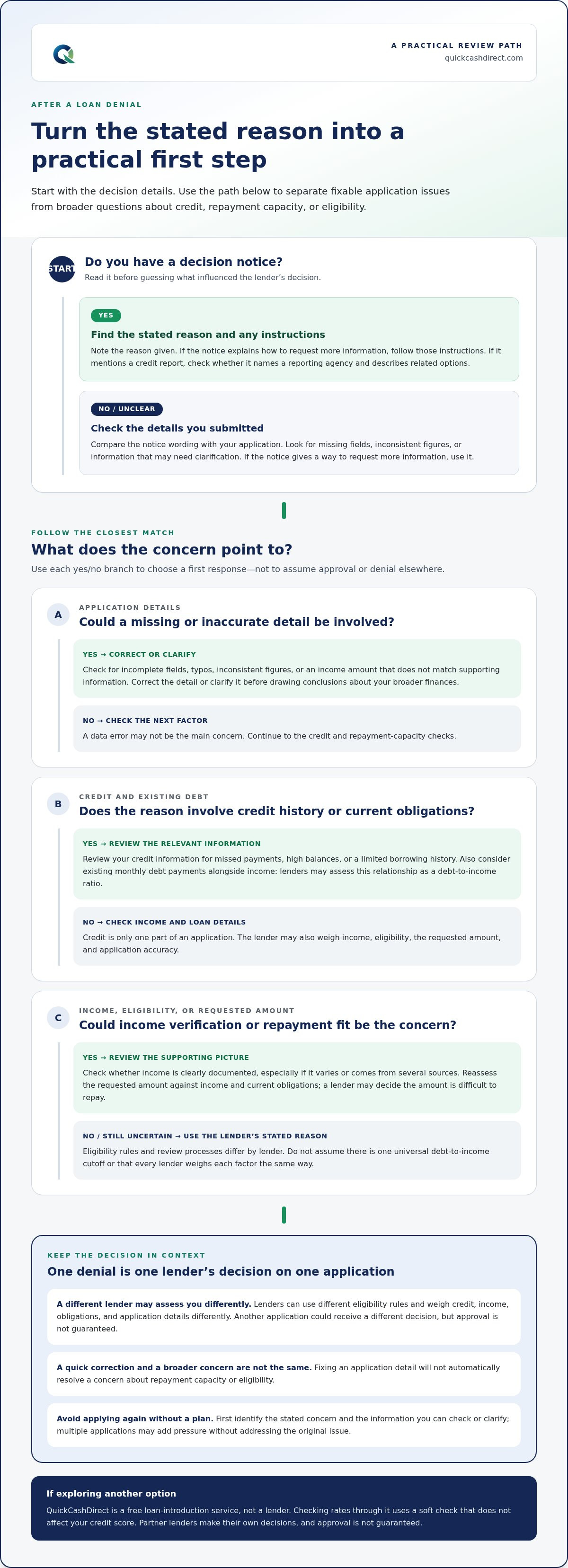
Separate the factors into two groups. A data issue, such as a misspelled name, incomplete field, or inaccurate income figure, may be correctable by checking your records and application. A concern about repayment capacity or eligibility may involve broader details, such as income compared with current obligations or requirements set by that lender. Fixing a data error won’t automatically resolve a broader concern.
The common reasons for loan denial can point to different actions, but they don’t reveal the exact cause on their own. General factors may include credit information, income, existing debts, eligibility, and the accuracy of submitted details. The lender applies its own standards. Don’t assume every lender uses the same scoring model, cutoff, or review process. Look for the reason tied to your application instead.
How to read a denial or adverse action notice
Read the decision notice carefully. Find the stated reason and any instructions for requesting more information. If it mentions a credit report, check whether it names a reporting agency and explains any related options. Keep the notice with your application records, and compare its wording with the information you submitted.
Notice requirements and available rights can depend on the circumstances and applicable federal or state rules. Don’t rely on a general summary for a legal deadline. The Consumer Financial Protection Bureau offers information about credit reports and scores. QuickCashDirect isn’t responsible for external content, and you use external sites at your own risk.
Use the notice to decide what kind of response makes sense:
- If it points to an application detail, compare the information with your records and identify what may need correction or clarification.
- If it cites credit-report information, review the relevant report details and look for information you don’t recognize or believe is inaccurate.
- If it raises repayment or eligibility concerns, consider whether your income, current obligations, or requested terms may have affected this lender’s assessment.
Take a measured next step. Correct a verifiable error before reapplying. If the concern is broader, first consider whether the circumstances behind it have changed. A different lender may assess an application differently, but that isn’t a promise of approval. After identifying the issue, you can explore a loan-introduction service such as QuickCashDirect’s lender-matching service. QuickCashDirect is not a lender; partner lenders make their own decisions. Checking rates uses a soft check that doesn’t affect your credit score.
Match the Loan Denial Reason to the Right First Response
Start with the reason stated in the lender’s decision, then choose an action that addresses that concern. Don’t assume every denial calls for the same fix. A report concern calls for checking the report. An income concern calls for checking what you submitted. An affordability concern calls for reviewing your budget before considering another application.
A report error is a problem with recorded information; a lender’s repayment assessment is a judgment about the application and your ability to manage another payment. The distinction matters. Correcting inaccurate data may address a record issue, but it won’t automatically change a lender’s view of affordability or eligibility.
Stated concern
What it may mean
Sensible first action
Credit report or credit history
A report detail or credit record affected the review.
Review the relevant report for unfamiliar accounts, incorrect balances, or inaccurate identity details.
Income or income verification
The income shown may not meet the lender’s criteria or may be difficult to verify.
Compare the application with current, accurate income records.
Existing debt or affordability
Current obligations may leave limited room for another payment.
Review debt payments and whether the proposed repayment fits your budget.
Missing or inconsistent information
The lender may not have been able to assess the application clearly.
Check submitted details against your records and identify any correctable gaps.
When the concern involves credit information
Check the report connected to the decision. Look for accounts you don’t recognize, balances that seem wrong, or personal details that don’t match your records. Focus on the item relevant to the notice rather than trying to change every part of your credit file at once.
If you find information you believe is inaccurate, follow the reporting agency’s current official dispute instructions. Keep copies of the relevant records and any dispute materials. Procedures can change, so use the agency’s current guidance. A dispute doesn’t guarantee that an item will be changed, that your score will improve, or that a lender will make a different decision.
When the concern involves income or affordability
Before applying again, compare the income details you submitted with your current records. Correct a mismatch or gather accurate supporting information if the lender’s notice identifies verification as an issue. Don’t inflate or guess at income to meet a lender’s criteria.
For an affordability concern, list your existing debt payments and regular expenses alongside the proposed loan payment. Consider whether repayment fits without relying on additional borrowing. The common reasons for loan denial can call for very different responses, so use the stated concern to choose your first step, not as a reason to submit another application immediately.
What to Do After a Loan Denial: Application Checklist
Use the decision as a starting point, not a cue to submit another application straight away. Work through this checklist in order. It helps separate quick corrections from issues that may need more time, then lets you decide whether another application makes sense for your circumstances.
- Read the decision notice. Review the full message, including any stated reason and instructions for requesting more information. Save a copy so you can refer to the exact wording instead of relying on memory.
- Identify the concern. Is the issue tied to credit information, income verification, existing obligations, eligibility, or missing application details? If the explanation is unclear, use any instructions in the notice to seek clarification.
- Check the relevant records. Compare your application with accurate income, employment, identity, and account information. If the notice points to credit data, review the relevant credit report and follow the reporting agency’s current official process if you believe information is inaccurate.
- Address what you can correct now. Fix an incomplete field or an inaccurate detail before considering another application. For example, if an income figure was entered incorrectly, make sure your records and any future application show accurate, consistent information.
- Assess what may take longer. If the concern involves repayment capacity or eligibility, review your existing debt payments and budget. Consider whether the proposed payment fits alongside your regular obligations. Don’t assume that changing the requested amount or applying elsewhere will resolve the underlying concern.
Review records and correct avoidable mistakes
Keep a simple record of the stated reason, the information you checked, and any steps you took. This makes it easier to avoid repeating the same error on a future application. It also helps you distinguish a corrected data problem from a broader lender assessment that may still apply. Focus on the issue named in the decision rather than changing details that weren’t identified as a concern.
Pause before submitting another application
Don’t send repeated applications without understanding the previous decision and considering whether a new application fits each lender’s criteria. Before proceeding, compare the amount requested and expected repayment obligation with your actual budget, not just the possibility of meeting eligibility requirements. A fixed waiting period doesn’t guarantee approval; the decision depends on the lender’s criteria and your circumstances at the time of review.
The common reasons for loan denial can call for different next steps. Once you’ve reviewed the notice, checked the relevant records, and considered repayment realistically, you can explore a loan-introduction option through QuickCashDirect. It’s a free loan-introduction service, not a lender. Partner lenders make their own decisions, and approval isn’t guaranteed. Checking rates through QuickCashDirect uses a soft check that doesn’t affect your credit score.
How QuickCashDirect Fits Into Your Next Loan Search
After identifying what may have affected your application, you can consider whether a loan-introduction service fits your next step. QuickCashDirect is a free loan-introduction service, not a lender. It connects applicants with lenders but doesn’t approve or fund loans itself. Using the service doesn’t guarantee that you’ll receive an offer or be approved.
All credit scores are welcome, but that doesn’t mean every applicant qualifies. Partner lenders make their own decisions using their individual criteria, including income and ability to repay. An earlier denial may be a reason to review your records and budget before exploring another application. A new lender may assess your details differently, but its decision can’t be assumed in advance.
What happens when you use a loan-introduction service?
A loan-introduction service helps connect applicants with lenders. The lender, not QuickCashDirect, reviews the application and decides whether to make an offer. If a lender makes an offer, that lender sets the terms. The offer, decision, and next steps depend on the lender’s criteria and review. No particular result or funding speed is guaranteed.
Checking rates through QuickCashDirect uses a soft check and doesn’t affect your credit score. A hard inquiry occurs only if you accept an offer. Treat any possible match as a starting point, not a final approval. The lender’s own review determines whether an offer is made and what terms apply.
Keep the reason for your earlier denial in view. If it involved unclear income details, use accurate information. If it raised a concern about repayment capacity, consider whether a new payment fits your current budget. Exploring another option shouldn’t replace a realistic assessment of your ability to repay.
Review any offer before accepting
Take time to read the lender’s agreement before accepting an offer. Check the repayment schedule, applicable terms, and total amount you’ll repay as described in the agreement. Make sure you understand when payments are due and whether the schedule works with your income and existing expenses. Don’t rely only on an offer summary if the agreement contains the complete terms. Any lender fees are disclosed in that lender’s agreement and depend on the lender, state, and loan amount.
QuickCashDirect introduces applicants to personal loan offers from $300 to $3,000, with terms of 3 to 36 months for qualified consumers. APRs range from 5.99% to 35.99% for qualified customers. For example, a $1,000 loan over 12 months has a representative total payback of $1,134.72 at a 29.82% APR. Your specific offer and repayment terms depend on the lender. Early payoff is generally allowed without penalty, but review your specific agreement to understand how it applies to your loan. If any part of the repayment terms doesn’t fit your budget or isn’t clear, pause before accepting.
The common reasons for loan denial don’t determine the result of a future application. Use what you learned to make a considered choice, then Explore QuickCashDirect as one possible next step. Checking rates uses a soft check that doesn’t affect your credit score; partner lenders make all lending decisions, and approval isn’t guaranteed.
Make Your Next Step a Deliberate One
A denial can help you decide what to do next, but only if you use its stated reason rather than guessing. Choose your next move based on what you learned and what fits your budget. The common reasons for loan denial don’t point to one universal solution, and applying again should be a considered choice.
If you’re ready to explore another option, QuickCashDirect is a free loan-introduction service, not a lender. All credit scores are welcome, but approval isn’t guaranteed. Partner lenders make their own decisions based on their criteria, including income and ability to repay. Checking rates uses a soft check and doesn’t affect your credit score.
Explore QuickCashDirect’s loan-introduction service as one possible next step. Review any lender’s offer and agreement carefully before accepting, and choose only a repayment commitment that works for your circumstances. A clear, informed decision can put you on steadier ground for whatever comes next.
Frequently Asked Questions
Does getting denied for a loan hurt your credit score?
The denial itself doesn’t automatically lower your credit score, but an inquiry connected with the application may affect it, depending on the inquiry type and lender’s process. Not every loan application uses the same inquiry method. Checking rates through QuickCashDirect doesn’t affect your credit score because it uses a soft check. If you’re unsure what happened during another application, review the lender’s notice or ask how it handled the credit check.
How long should you wait before applying for a loan again?
There’s no universal waiting period that guarantees a different result. First, identify the reason for the denial. If a detail was missing or entered incorrectly, correct it before applying again. If the concern involves repayment capacity or eligibility, consider whether anything relevant has changed. Lender criteria differ, and a later application can still be denied. Don’t use a date as your only plan; prepare based on the issue identified.
Can you get a loan after being denied by another lender?
Possibly. Another lender may use different criteria, so one decision doesn’t determine every future outcome. Before exploring another application, review the first lender’s stated reason and consider whether the proposed repayment fits your current budget. For example, if existing payments already strain your finances, a new application may not address that concern. Approval is never guaranteed, and applying to several lenders at once isn’t a reliable shortcut.
Can you be denied a loan even with a good credit score?
Yes. A credit score is only one possible part of a lender’s review. The lender may also consider income, existing obligations, application accuracy, eligibility, and its own criteria. Lenders don’t necessarily weigh those factors in the same way. If you’re denied despite a good score, don’t assume the score explains the outcome. Check the stated reason and focus your next steps on the specific issue named.
What should you do if a loan denial notice has no clear reason?
Read the full notice for instructions on requesting the reason or contacting the lender. Disclosure requirements can depend on the decision and applicable law, so verify current federal and state rules rather than relying on a general deadline. Keep the notice, your application details, and any follow-up messages together. A dated record can help you track what you asked and what information the lender provided.
Can a missing or thin credit file lead to a loan denial?
Yes. A limited credit history can leave a lender with less information to assess how you’ve managed borrowing, but criteria differ between lenders. A thin file doesn’t automatically mean you can’t qualify elsewhere. Check whether the decision identifies limited credit history, then review the credit information available to you for errors or unfamiliar details. Opening a new account doesn’t guarantee approval and may not address the lender’s specific concern.
Can a lender deny a loan because of an error on the application?
Yes. Missing, inconsistent, or inaccurate details may make an application harder to assess or prevent the lender from verifying information. Compare what you submitted with accurate records, including income and identity details, and correct any mistakes before applying again. An application error is different from a lender’s assessment of affordability. Fixing an error may clarify your information, but it won’t automatically reverse the original decision.